DefaultTrust (DT) — The Inner Circle
DefaultTrust is the curated set of accounts whose trust feedback is visible by default to every viewer. Understanding DT is understanding how trust actually propagates on the forum.
The mechanic
When you click any user's Trust tab, you see:
- Trust feedback from people in DT-1
- Trust feedback from people in DT-2 (trusted by someone in DT-1)
Feedback from anyone outside that web still exists and is still readable — it is shown as untrusted rather than hidden. Which feedback counts as "trusted" depends on whose trust list you are viewing through, so two people can look at the same profile and see different summaries.
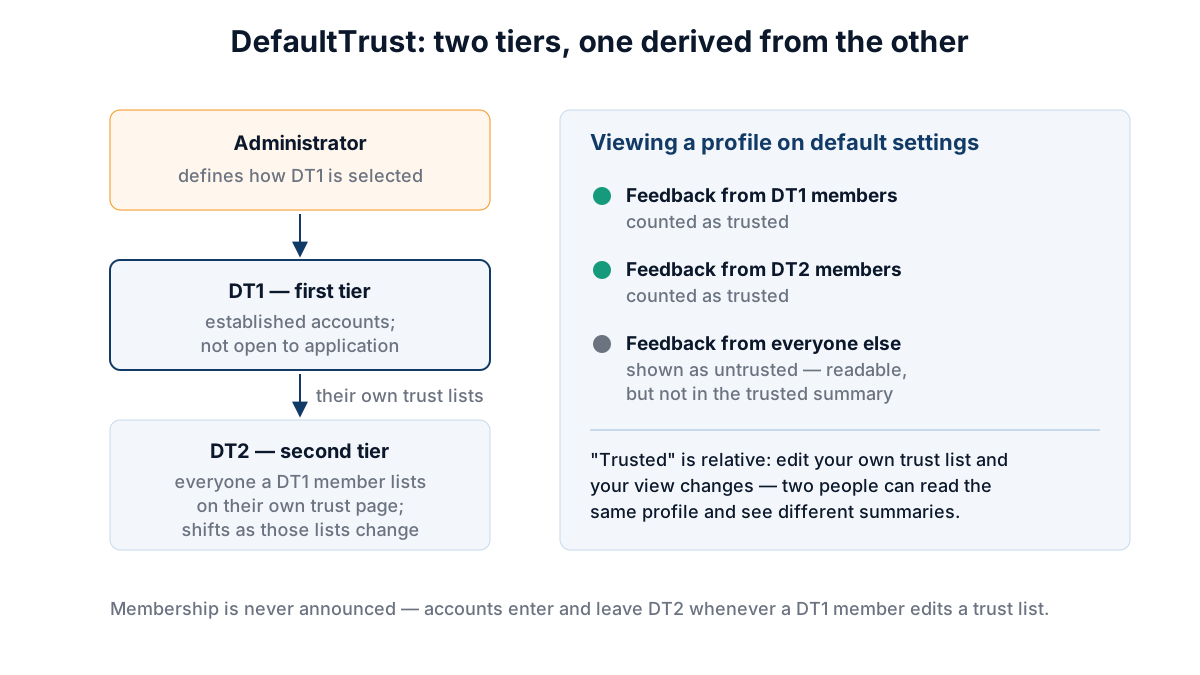
DT1 is set administratively and DT2 is derived from DT1 members' own trust lists, so who counts as trusted shifts whenever those lists change — nothing is announced.
Academy original
Who's in DT
DT has two tiers, and the difference matters.
DT1 is the top of the chain. The administrator defines and operates how that list is selected — it is not chosen by the members already on it, and it is not open to application.
DT2 is derived from DT1. Each DT1 member maintains their own trust list, and the accounts they include are pulled in. That layer is emergent: long-tenured, well-judged accounts effectively vote with their trust lists.
So "who's in DT" has no single answer. The floor is set administratively; everything above it is the product of individual judgement calls, which is why membership shifts without anyone announcing it.
Some DT members joined in 2013 and never left. Others rotate in and out as the community's judgement shifts.
What DT trust means
Positive trust from a DT member: A small but real signal of vouching. There is no threshold that converts a count of positives into credibility — anyone assessing you reads the feedback itself, not the total.
Negative trust from a DT member: A large signal. Often corroborated by other DT members reviewing the case. It does not block posting or trading, but many campaign managers and counterparties check trust before dealing with you, so expect fewer people to engage until it is resolved.
Distrust on a DT member: Possible. If enough DT members distrust someone, that person leaves DT.
How to think about DT as a newcomer
You won't be in DT for years (if ever). What matters:
- Don't earn DT red trust. Be careful in trades, don't lie about anything material, don't wear scam signatures.
- Build a public record of clean transactions. Successfully complete small trades; earn organic positive feedback.
- Read the Reputation board weekly. That's where DT decisions play out publicly. You'll learn faster from one hour there than any guide.
Common misconceptions
"DT is a cabal that decides who succeeds." DT influences trust visibility, not whether you can post or trade. Plenty of users earn well outside DT view.
"DT membership is purely self-organising." Not quite. The administrator defines and operates how the DT1 list is selected; DT2 is then derived from the trust lists DT1 members maintain. It is neither a hand-picked council nor a fully independent election.
"I can complain my way out of red DT trust." Almost never works. Evidence-based resolution does.
When DT gets it wrong
DT is imperfect. Sometimes a DT member leaves bad feedback in error or with insufficient evidence. The path:
- Reply in the reference thread with your side + evidence
- Post in the Reputation board calmly, with full context
- Let other DT members evaluate and weigh in
- Only the author of a piece of feedback can edit or delete it — public context can persuade them, but no one else can remove it for you
This is slow. Days to weeks. Don't expect instant fixes.